Skip to content
Blog / Tag

#LLM Serving

6 posts

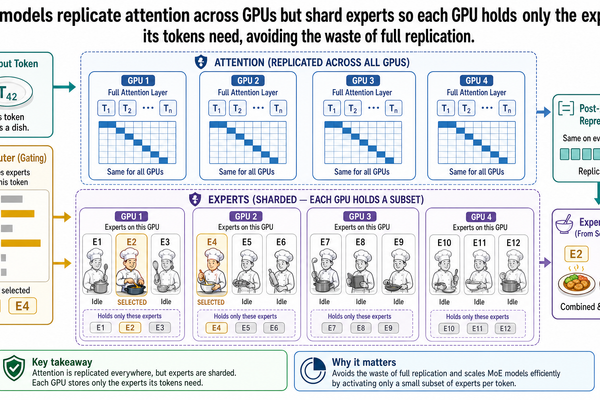
A token walks past a panel of expert chefs; a small router consults a list and lights up just two experts, while the others stand idle for this dish.

MoE 分片:混合專家模型的平行化策略

在 I-00 篇中,我們列出了 LLM 推論與傳統模型服務的五項差異。前四項——可變長度運算、兩階段資源特徵、不斷增長的記憶體需求,以及快取感知路由——每一項都已經在本系列的專文中討論過了。第五項則只用一句話帶過:「部分現代 LLM 使用混合專家模型(MoE, mixture of experts)架構,不同的輸入會啟動模型的不同部分。將 MoE 模型分散部署到多張 GPU 上,所需的分片(sharding)策略與密集模型(dense model)截然不同。」

Huang Tzu Lin
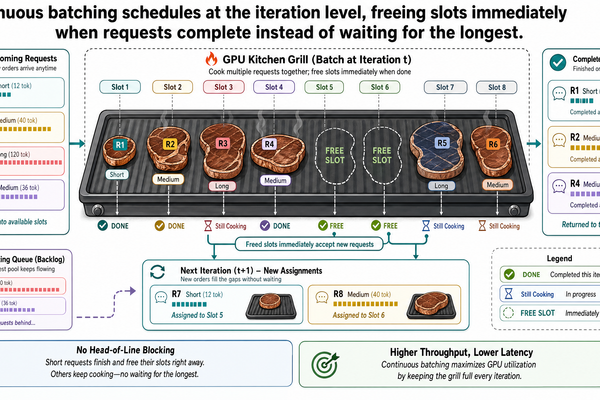
GPU kitchen grill with multiple steaks of different sizes cooking simultaneously: short orders finishing fast, long orders still going, new orders sliding into the gaps.

連續批次處理:用一張 GPU 服務大量請求

I-00 追蹤了單一請求通過推論流程的完整路徑:預填充(prefill)以平行方式處理所有輸入 token,解碼(decode)逐一生成輸出 token,而 KV 快取(key-value cache)隨著每一步不斷增長。在那篇文章的結尾,我們注意到還有 49 個其他代理人幾乎同時提交了查詢。這個觀察不是隨口帶過——它直接指向推論服務的核心運作問題。

Huang Tzu Lin
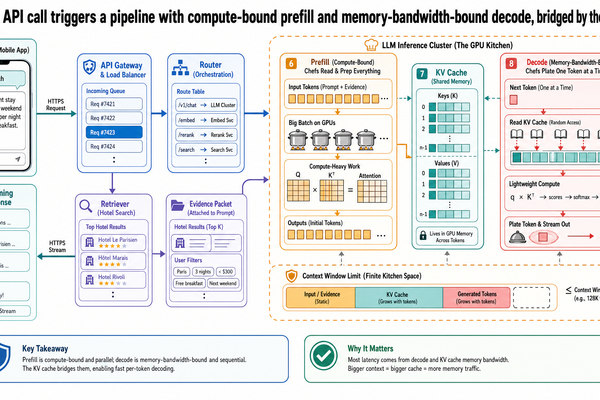
Hotel-search query routed from a phone through a server cluster into a GPU kitchen where chefs read tokens, plate a response, and stream it back.

呼叫 API 之後發生了什麼事

你已經建好一個旅遊小助理。使用者輸入一段查詢,你的應用程式把它送到 LLM 供應商的 API,幾秒後回應串流回來。對應用程式開發者來說,那就是一次函式呼叫。但從基礎設施的角度來看,這一次呼叫觸發了一整條流程(pipeline),牽涉到不同的運算階段、專用的記憶體結構、排程決策,還有硬體限制。這些因素加在一起,決定了使用者實際感受到的延遲、吞吐量和成本。

Huang Tzu Lin