
Skip to content
Blog / Tag

#GPU Memory Management

4 posts

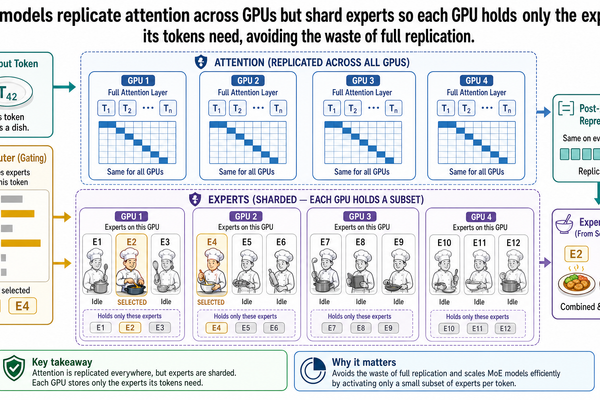
A token walks past a panel of expert chefs; a small router consults a list and lights up just two experts, while the others stand idle for this dish.

MoE 分片:混合專家模型的平行化策略

在 I-00 篇中,我們列出了 LLM 推論與傳統模型服務的五項差異。前四項——可變長度運算、兩階段資源特徵、不斷增長的記憶體需求,以及快取感知路由——每一項都已經在本系列的專文中討論過了。第五項則只用一句話帶過:「部分現代 LLM 使用混合專家模型(MoE, mixture of experts)架構,不同的輸入會啟動模型的不同部分。將 MoE 模型分散部署到多張 GPU 上,所需的分片(sharding)策略與密集模型(dense model)截然不同。」

Huang Tzu Lin
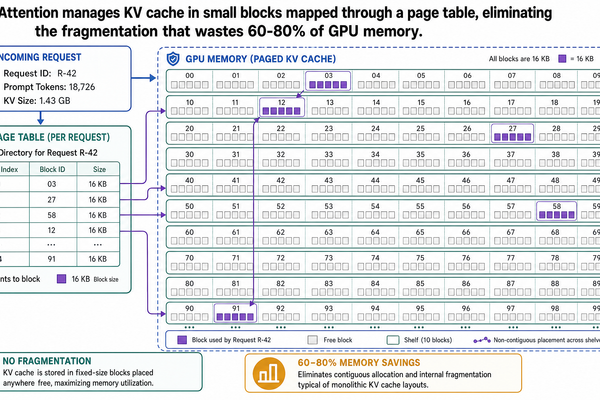
GPU memory room divided into many small numbered shelves; one request's receipts spread across non-contiguous shelves with a directory pointing to each slot.

分頁式 KV 快取:LLM 推論服務的 GPU 記憶體管理

在 I-00 篇中,我們走過了一次 API 呼叫從頭到尾通過推論管線的完整流程,也認識了 KV 快取(key-value cache)——一種用來儲存注意力機制中 key-value 向量的資料結構,讓模型不必在每個解碼步驟重複計算這些向量。KV 快取會隨著每個生成的 token 不斷增長,而且在整個請求期間都必須留在 GPU 記憶體裡。到了 I-01 篇,我們又認識了連續批次處理(continuous batching):它在迭代層級進行排程,不再傻等批次中最慢的請求跑完,因此能讓更多請求同時保持運作。

Huang Tzu Lin